
The Ninth Amendment...the CYA Amendment
Even the founding fathers needed a caveat amendment.

The enumeration in the Constitution, of certain rights, shall not be construed to deny or disparage others retained by the people.
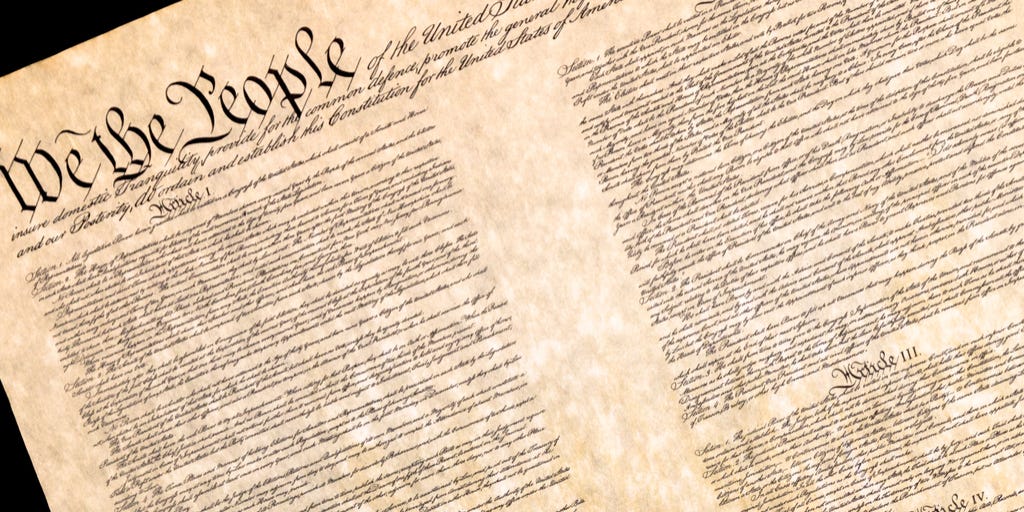
To put it simply, the Ninth Amendment is the “in case we forgot” amendment. I’ve given three different clever names to this amendment, and I’ve barely started this article.
The founding fathers were imperfect humans and were humble enough to recognize that. Before they closed out the Bill of Rights, they made sure there was a small amendment added to the list that basically said the Bill of Rights is not an exhaustive list of rights.
In the spirit of the Constitution being a living document, the founding fathers wanted to be sure it was understood the Bill of Rights is not on the same level as the Ten Commandments.
Federalism versus Anti-Federalism
As far as the Ninth Amendment is concerned, it was created to settle a debate. The grand debate at the time was between Federalists and Anti-Federalists.
The Federalists argued that a specific list of rights “retained by the people” was unnecessary and would give the federal government too much power over any rights not specifically listed in the Bill of Rights.
The Anti-Federalists flat out refused to ratify the Constitution if there wasn’t a list of protected rights specifically laid out.
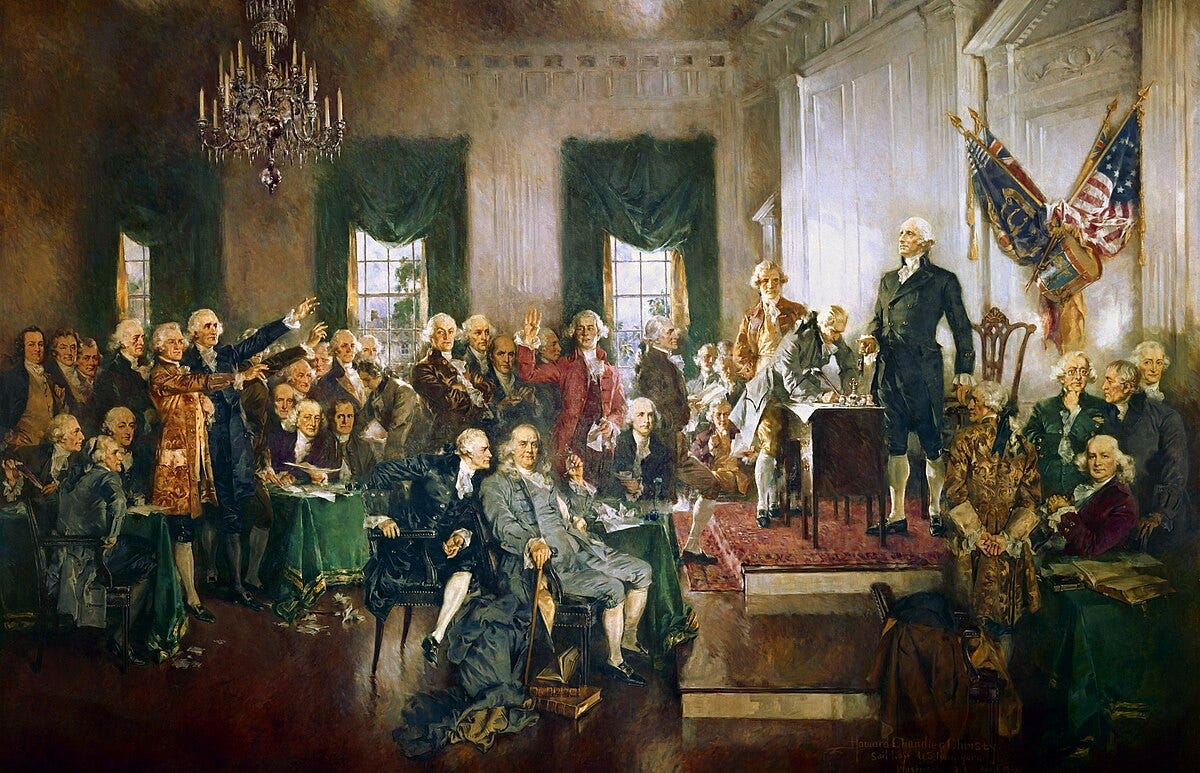
So, how did the two sides reach an agreement? How did the Anti-Federalists get the Federalists to agree to have a Bill of Rights? Federalism ultimately won out in the grand scheme of things, so if they didn’t want a Bill of Rights, how did we end up having one?
James Madison provided the compromise by introducing the Ninth Amendment, writing it as a “catch all”. If a right wasn’t listed in the Bill of Rights, that didn’t mean it didn’t count as a right. Like I said above, this is one of those areas in the Constitution that lends credence to it being a living document.
Case Law Examples
The Bill of Rights is pretty comprehensive, so what are some rights that weren’t specifically listed? Two landmark cases give an example of this, both surrounding procreation.
Griswold v. Connecticut (1965)
This case related to the use of contraceptives, which were banned in Connecticut as far back as 1879. As is the case with many landmark cases throughout US history, this one was a setup. A gynecologist and the head of Planned Parenthood in Connecticut opened a birth control clinic with the intention of challenging that law.
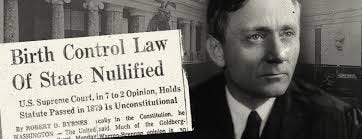
They were arrested and their arrest was affirmed by higher courts. Once the case got to the Supreme Court, the Ninth Amendment came up. Justice Douglas argued the Constitution has an inherent right to privacy written throughout several amendments within the Bill of Rights.
That appeared to be a bit of a stretch for some of the other justices. Justice Goldberg concurred that the right existed but tied it more thoroughly to the Ninth and Fourteenth Amendments.
This case established a right to privacy in the Constitution, which set the table for another landmark case.
Roe v. Wade (1973)
I recognize this one was overturned not that long ago, which we will discuss in the next section. For now, let’s talk about what this case was about and how it reaffirmed the right to privacy established through the Ninth Amendment.
In 1970, Jane Roe (a pseudonym) filed a lawsuit against Henry Wade in Dallas, Texas. At the time, abortion was outlawed except to save the life of the mother. Roe claimed the law was vague and violated her right to privacy. She cited the Ninth Amendment among the litany of amendments that established the right to privacy from the previous landmark case.
In 1973, Justice Blackmun wrote in favor of the majority decision, stating the Due Process Clause protects the right to privacy, and a woman’s right to an abortion falls under the right to privacy.
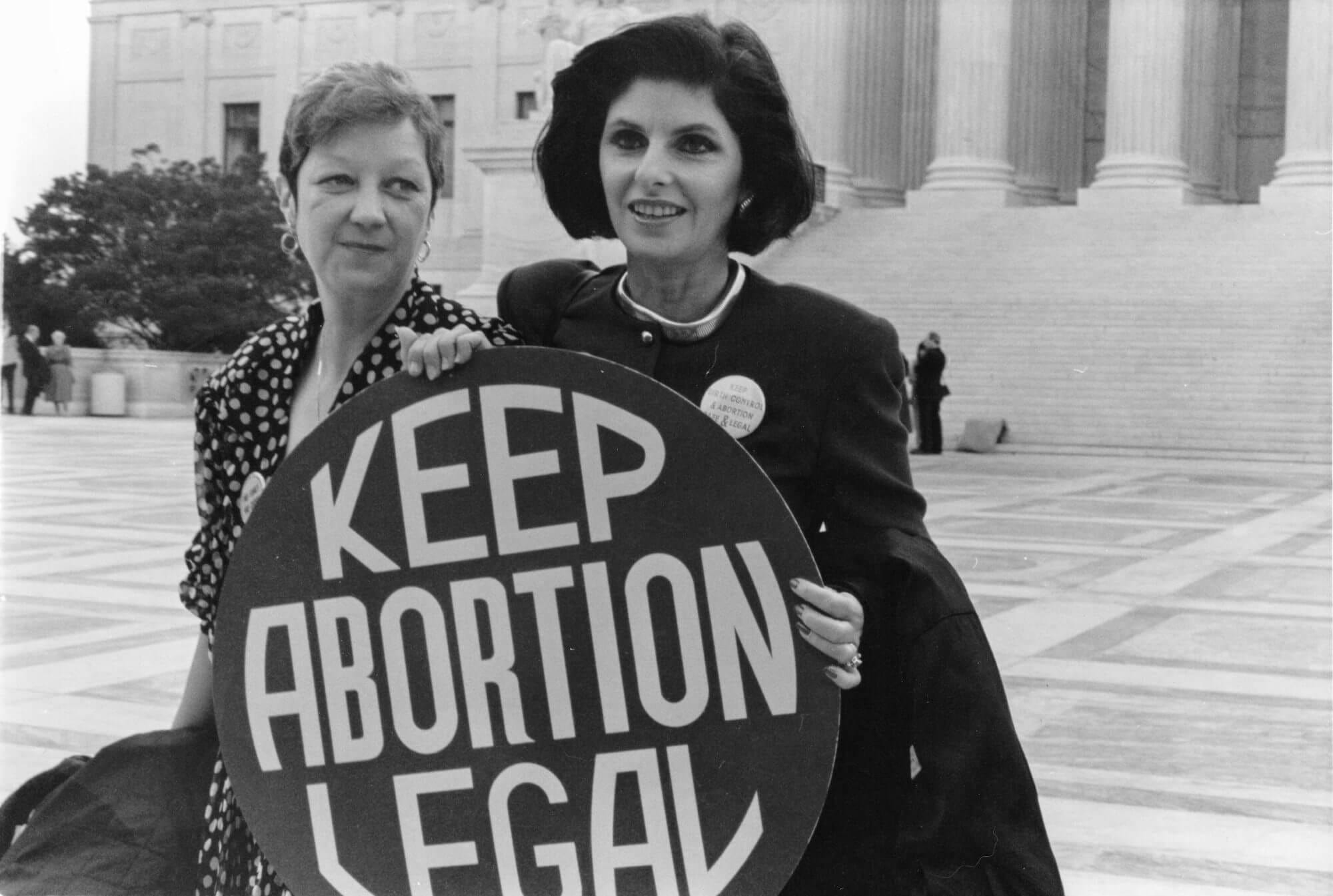
This was seen as a massive expansion of the right to privacy and even went so far as to establish a viability standard, advising that the state can only ban abortions after the fetus reaches the point of viability. Critics had a lot to say about this decision, which culminated in its overturning in yet another landmark case over fifty years later.
Testing the Limits
Dobbs v. Jackson Women’s Health Organization (2022) overturned Roe v. Wade.
Colloquially, it’s referred to as the Dobbs Decision. In 2018, Mississippi passed a law prohibiting all abortions after fifteen weeks of pregnancy. Jackson Women’s Health filed suit in district court, stating Mississippi could not establish viability at fifteen weeks, so the law was unconstitutional per Roe v. Wade.
The Supreme Court identified five factors that have to be considered in deciding to overrule previous cases (in this instance they overruled Roe v. Wade and another case called Planned Parenthood v. Casey):
The nature of the error in the previous cases: The Dobbs Decision argued these two cases disrupted the democratic process by removing the decision from the electorate and making it an ironclad law.
The quality of their reasoning in those cases: It also argued the decisions in both cases weren’t grounded in any text of the Constitution nor in any prior precedent.
The workability of the rules they imposed: It further argued no standard could be applied to due versus undue burden in the context of abortions. Without a consistent standard, any barrier, no matter how small, could be construed as an undue burden. So, the law couldn’t be applied consistently.
The disruptiveness to other areas of the law: Then the Dobbs Decision argued a case must be overturned if it will impact other constitutionally upheld laws, such as the First Amendment right to freedom of speech. The decision in Planned Parenthood v. Casey specifically impacted the First Amendment.
The lack of concrete reliance: The Dobbs Decision finally argued the previous cases have inevitably influenced how the American people structure their lives and relationships, making it an intangible reliance interest, whereas the courts only deal in concrete reliance interests such as property or contract rights.
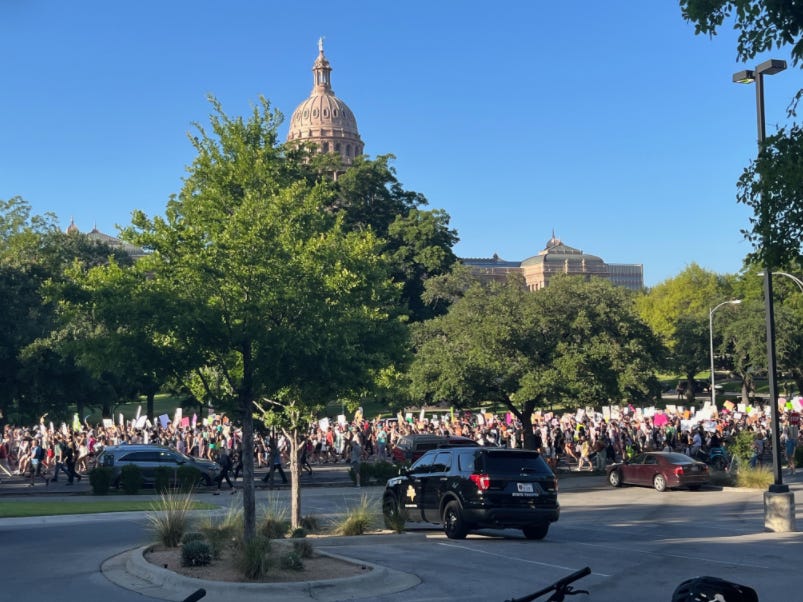
Whether you believe the Dobbs Decision tested the limits of the Ninth Amendment, or you believe the Dobbs Decision merely overturned a bad ruling is largely based on your political beliefs. Either way, even fifty years after abortion rights activists believed this debate was settled, the Ninth Amendment came right back to the forefront.