
What is a "Stakeholder"?
When those with skin in the game must give deference to those without.

Recently I was listening to a podcast that discussed, in part, the concept of stakeholder capitalism, and how it’s a clever rebranding of economic fascism (yeah, I have weirdly specific interests sometimes). It’s worth a listen if you have an hour of household chores to work through:
The podcast focused on President Trump’s views on the World Economic Forum. But the part that really caught me was the very clear articulation of how stakeholder capitalism ultimately leads to economic fascism in part because a stakeholder can be defined so broadly to the point that government intervention in a private business can be justified to ensure stakeholders are properly represented.
My publication doesn’t focus on economics directly, so that’s not what I’m going to talk about. However, the term stakeholder has been banging around law enforcement for a while now, and its pervasive nature in the economic realm has parallels to the public safety industry.
Most, if not all of us, are familiar with the term shareholder. If you have a retirement account, you’re a shareholder in probably several publicly traded companies, if not hundreds if you’re doing it right.
What this means is you have skin in the game, so to speak. When a company you have shares in does well, your shares go up in value. That means if you were to cash out your shares at that point, you’d make money. Therefore, You have a vested interest in the financial success of any company you have shares in.
Stakeholders in a company, on the other hand, are a broad group of people who could potentially be impacted by the decisions of that company but have no tangible interest in its success.
To put it simply, stakeholders have no skin in the game, at least none that can be properly defined or measured.
What Does This Have to do with Law Enforcement?
In policing, shareholders generally include tax-paying citizens, police officers, and city leaders. Each of these groups have a vested interest in their police department successfully executing the mission of enforcing the law.
Tax-paying citizens enjoy less crime when their police officers enforce the law. We’ve seen it time and again whenever a crime hot spot has been cleaned up. Those in my town with a long memory might recall the open-air drug market at East 12th Street and Chicon Street.

A few years of aggressive drug enforcement turned that intersection into a hipster’s paradise with a couple empty lots full of over-priced food trailers and some fusion restaurants. There was a pretty solid bagel spot there for a while when I patrolled the area.
Police officers obviously benefit from lower crime rates because their job becomes far less stressful. I’ve worked in a few areas of my city at this point and have found myself stressed in some areas and relaxed in others. I don’t think I need to spell out for you why lower crime areas are less stressful than others for anyone, not just cops.
City leaders also feel the benefits of lower crime, if not more so than the other shareholders. They tend to get re-elected when they do a good job in this category. When crime is down, economics tend to go up, which makes voters happy.
Then city leaders get to focus on other quality of life issues their constituents consistently complain about. If the murder rate isn’t clogging up the headlines then that’s some free real estate for their latest council district pet project.

Who is a shareholder and who is a stakeholder is a vital distinction when it comes to crime reduction. Shareholders are results driven. Stakeholders have any number of motivations behind their preferences.
So What Exactly is a Stakeholder in a Law Enforcement Context?
When it comes to city politics—an area police officers loathe to contend with, but are nevertheless entangled with—the realm of stakeholders is far more encompassing than traditional shareholders.
It’s an ill-defined term. Basically, anyone who could be remotely impacted by law enforcement efforts could be considered a stakeholder. As every millennial’s favorite chick flick states: The limit does not exist.

Anyone with any “stake” in societal outcomes apparently has some nebulous form of voting rights when it comes to the actions a law enforcement entity makes. This is how chapters of the Democratic Socialists of America (DSA) with no ties to Austin wormed their way into contract negotiations between the Austin Police Department and the City of Austin back in 2017.
As you can imagine, this gets exhausting pretty quickly. If the term “stakeholder” can’t be confined to a reasonably restrictive definition, then anyone can be a stakeholder regardless of how much they’ve personally invested—either monetarily or otherwise—into the endeavor of law enforcement.
This problem cropped up a long time ago when I discussed the informal nationalization of law enforcement in the United States in the early days of this publication.
A key benefit of local policing is that it is tailored to the local area. Dragging local police into the national spotlight effectively creates the most inefficient version of a national police force. Each node is acting independently of the others but is then held to account for the actions of another node of which they have virtually no control or access.
This hamstrings local policing considerably. Instead of local citizenry engaging with their city leadership over the best path forward for their local police department, national narratives take precedence.
Without properly defined terms, we can’t have properly defined end states.
When stakeholders across the nation have a say in what happens in a city, that city has to contend with issues beyond its control or purview. Conversely, if you’ve seen your city leaders focusing too heavily on issues outside their own city, you’re seeing what it’s like when your city leaders are acting like stakeholders in another city.

This has happened across the country with city leaders weighing in on ICE operations in Minneapolis. Los Angeles Mayor Karen Bass was in Africa on city business during the Palisades Fires. Former Austin Mayor Kirk Watson would routinely comment on Texas border issues, sparring with the governor of his own state online.
That’s what happens when city leaders elevate stakeholders over shareholders. The ill-defined realm of stakeholders means your city leaders have to focus on issues outside of what city shareholders are concerned about.
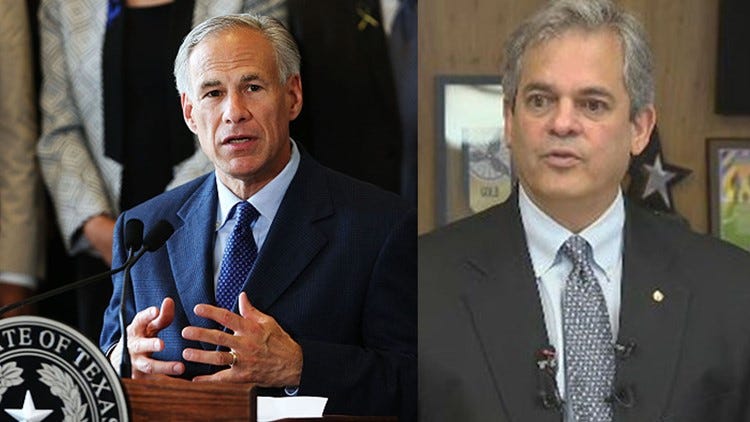
National issues enter into the fray of local issues. Rather than focusing on everyday issues that affect their constituents, city leaders become distracted by issues outside the areas they have a fiduciary responsibility over.
If you want your city leaders to focus on city issues, you have to advocate for those things. If you don’t, you’ll continue to see those same city leaders focus on nebulous societal problems with far less measurable results.
Well, why would any politician want their constituents to focus on their failures when they could have them focus on someone else’s?